Janus Edge vs Kong AI Gateway: Self-Hosted vs Konnect Cloud
Janus Edge vs Kong AI Gateway: self-hosted vs a Konnect cloud control plane, prompt privacy, features, and fixed per-seat vs usage-based pricing.
On this page
- TL;DR
- 1. Cloud-hosted vs. locally hosted: what actually changes
- How Kong AI Gateway is deployed
- How Janus Edge is deployed
- Side by side
- 2. Feature comparison matrix
- 3. Pricing models: usage-based vs. fixed per user
- Kong Konnect (list prices, verified November 18, 2026)
- Janus Edge (list prices, verified November 18, 2026)
- Worked example (illustrative only)
- 4. Who should pick which
- Getting started
- Sources
Once AI use spreads past a pilot, most companies end up wanting the same thing: one place where every LLM request is authenticated, allowed or refused, metered, logged, and charged to the right team. That place is an AI gateway.
Kong and Janus Edge both build one, but they start from different places. Kong is an established API management company. Its AI Gateway governs LLM, MCP, and agent-to-agent (A2A) traffic, and in the usual setup it is managed through Kong Konnect, Kong’s cloud platform. Janus Edge is a downloadable gateway that you run entirely on your own network, priced per active user. The current stable release is v2026.11.2.
This post compares the two honestly: where they run, what happens to your prompts, what each one does, and how the pricing models behave as you grow. In some cases Kong is the better fit, and we say so below. We make Janus Edge, so every Kong statement is tied to Kong’s own public pages. Sources are listed at the end and were last checked on November 18, 2026. If something here has gone out of date, tell us and we will correct it.
TL;DR
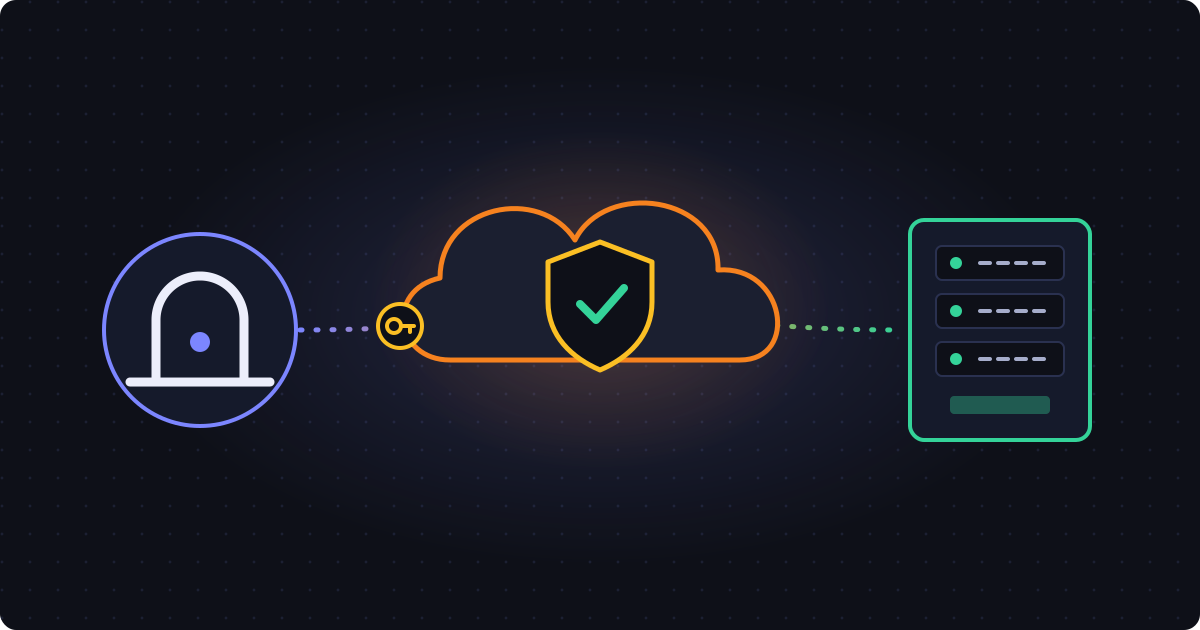
- Where it runs. Kong AI Gateway 2.x on Konnect uses a hybrid model: the control plane is fully managed by Kong in Konnect, and the data plane nodes run in your infrastructure. Kong also offers Dedicated Cloud and Serverless gateways that it runs for you. A fully self-hosted install, where both control plane and data plane are local, is documented as an on-prem AI Gateway 2.x deployment and is sold as part of Kong’s Gateway Enterprise offering, priced through sales. Janus Edge is self-hosted only, control plane and data plane alike, in every edition, including air-gapped networks.
- Pricing model. Kong Konnect Plus is usage-based: you pay per control plane, per million requests, per model proxied, and for some add-ons. Janus Edge is a fixed price per active user: $0 for Community (up to 25 users, if you qualify), $10 per seat per month or $108 per seat per year for Business (5-seat minimum), and a custom Enterprise quote. Nothing is charged on top of your AI spend.
- Pick Kong if you already run Kong for your APIs, need MCP and A2A governance today, or want a vendor-managed control plane. Pick Janus Edge if keeping identity, cost data, and configuration on your own network is a requirement and you want a cost that doesn’t move with request volume.
1. Cloud-hosted vs. locally hosted: what actually changes
“Self-hosted” means different things for different products, so here is how each one is actually built.
How Kong AI Gateway is deployed
According to Kong’s architecture documentation, AI Gateway “uses a hybrid deployment model.” The control plane is fully managed by Konnect. It holds the configuration for providers, models, policies, and consumers and pushes it to your self-managed data plane nodes, which carry the actual LLM traffic. Kong’s docs also state that AI Gateway (the 2.x entity model on Konnect) “runs in a single deployment mode: hybrid.” There is “no self-managed database-backed option, standalone DB-less mode, or fully self-hosted control plane for AI Gateway entities today.”
There are other ways to run Kong:
- Konnect-run gateways. Kong’s pricing page lists Dedicated Cloud Gateways (in your choice of AWS, GCP, or Azure region) and Serverless AI Gateways, both run by Kong.
- Fully self-hosted / on-prem. Kong’s pricing page says fully self-hosted AI gateways, where both control plane and data plane are local, are “available as a part of our separate Gateway Enterprise offering” with “fully custom” pricing through sales. Kong also publishes an on-prem Docker Compose guide for AI Gateway 2.x. The current documented image is
kong/kong-ai-gateway:2.3.1, it uses a local PostgreSQL database, and it requires a Kong Enterprise license (KONG_LICENSE_DATA). Configuration is applied with decK (deck ai sync), which converts AI Gateway 2.x entities into Kong Gateway 3.x configuration. - Open source. Kong Gateway itself is Apache 2.0 licensed. Kong announced free, open-source AI plugins (such as AI Proxy and AI Prompt Guard) in Kong Gateway 3.6. Kong’s pricing page lists advanced AI plugins as paid plugins. The current Plus list names AI AWS Guardrails, AI Azure Content Safety, AI Prompt Compressor, AI Proxy Advanced, AI RAG Injector, AI Rate Limiting Advanced, AI Sanitizer, AI Semantic Cache, and AI Semantic Prompt Guard.
How Janus Edge is deployed
Janus Edge is a single Go binary with the admin console built in. You can install it as a Linux server service, with Docker Compose and PostgreSQL, as a Docker image (including offline image files), or from a Helm chart. There is a short install walkthrough on YouTube. There is no hosted version. Licenses are signed files verified offline, and every edition runs fully offline. License sync and update checks are both off by default.
Side by side
| Concern | Kong AI Gateway on Konnect (hybrid) | Janus Edge |
|---|---|---|
| Data residency | LLM traffic flows through data plane nodes you run. Configuration lives in the Konnect control plane, in a geo you choose. Kong’s current control-plane geos are AU, EU, US, IN, and SG (Singapore requires an admin opt-in). Dedicated Cloud Gateways have a wider list of cloud regions, including Middle East regions such as UAE. Kong says only “authentication, billing, and usage” are shared across geos. | Configuration, metering data, and logs live in your own database (SQLite to evaluate, PostgreSQL in production) on your network. |
| Prompt and data privacy | Per Kong’s docs, the control plane “stays out of the data path,” and telemetry sent to Konnect includes “only usage, cost, and latency metadata” by default. Two opt-in settings (log_payloads, log_blocked_content) can forward payload content. |
Prompts aren’t stored by default; only request metadata is kept. Full request capture is an opt-in, time-limited troubleshooting mode (Business) that can be purged. Nothing goes to Torvanis unless you turn on update checks or license sync, and neither of those ever sends prompts or responses. Janus Chat keeps each person’s chats encrypted. |
| What leaves your network | Usage and cost telemetry streams to Konnect, along with config pulls and node certificates. That’s by design: it powers Konnect Analytics. | By default, nothing beyond your calls to the AI providers you choose. Requests to models on your own GPUs stay inside. |
| Latency | The data path runs through your own data plane nodes, so the control plane adds no per-request hop. Kong documents a range of load-balancing algorithms, including lowest-latency. | The data path runs through your own gateway. Streams pass through without buffering. We haven’t run a head-to-head latency benchmark, so we make no speed claim here. |
| Control | Configuration always starts in the Konnect control plane. If the control plane is unreachable, data plane nodes keep proxying with their last config; only updates pause. | All control is local. If a license expires, traffic keeps flowing and no one is signed out. Only creating new items pauses until renewal. |
| Compliance and restricted networks | Kong documents FIPS 140-3 support (a FIPS-compliant package that uses approved algorithms in FIPS mode; Kong says the product itself has not been submitted to a NIST lab for validation). A fully on-prem control plane requires Gateway Enterprise. | Air-gap install and offline license checks work in every edition. Enterprise adds perpetual keys, purchase by PO or wire with keys delivered by hand, and air-gap deployment support under an SLA. The full source is readable under the Elastic License 2.0. Business includes a Janus FIPS edition and a STIG configuration profile. |
| Cost predictability | Usage-based on Konnect Plus (see section 3). Enterprise is custom. | Fixed per active user, no matter how many requests or tokens go through. |
What this means in practice. Kong’s hybrid design is a sensible engineering choice. Your prompts flow through nodes you operate, and Kong is careful to keep payloads out of the control plane by default. The trade-off is that your gateway’s configuration and its usage telemetry live in Kong’s cloud. For many companies that’s fine. For companies whose security review requires the whole gateway (config, identities, cost records, and logs) to sit on their own network, or on a network with no internet at all, Janus Edge removes that question entirely.
2. Feature comparison matrix
How to read this table: “Paid plugin” means Kong’s pricing page lists it as an AI Gateway paid plugin (an add-on on Konnect Plus, included on Enterprise). “Business” or “Enterprise” means a paid Janus Edge edition. A dash means we found no such feature on that vendor’s public pages; it doesn’t prove the feature doesn’t exist.
| Capability | Kong AI Gateway | Janus Edge |
|---|---|---|
| Deployment | Hybrid (Konnect control plane + your data plane); Dedicated Cloud and Serverless gateways; on-prem AI Gateway 2.x via Gateway Enterprise | Self-hosted only: Linux binary, Docker, Helm, Compose; offline image files |
| Air-gapped / offline | The Konnect AI Gateway control plane is Kong-managed, so data plane nodes connect to Konnect for config. A fully self-hosted control plane is part of Gateway Enterprise (custom pricing). Kong documents that Gateway Enterprise license validation doesn’t need network connectivity. We found no Kong page that documents an air-gapped AI Gateway deployment specifically. | Every edition; perpetual keys on Enterprise |
| Unified LLM API | Yes: one consistent API across OpenAI, Anthropic, Azure AI, Amazon Bedrock, Gemini, Vercel and more | Yes: OpenAI-compatible API in front of OpenAI, Anthropic, Bedrock, Vertex, Gemini, Ollama, vLLM, TEI and other OpenAI-compatible servers |
| Protocol translation | Format conversion handled by the AI Model entity | Claude and Bedrock served through the OpenAI API, including tools, caching and streaming |
| Request types | Chat, embeddings, image, audio, video, realtime | Chat, completions, embeddings, images, speech in both directions, Responses, Assistants, files, moderation |
| MCP and A2A governance | Yes: MCP server generation from APIs, MCP auth, A2A observability and AuthN/Z | — (not listed on janusedge.com) |
| Inbound authentication | API key or OpenID Connect via AI Auth Strategy (one OIDC strategy per AI Gateway). Kong doesn’t publish whether OIDC for AI Consumers costs extra on Konnect Plus. | Personal API tokens, team service tokens, OIDC SSO (Okta, Entra ID, Authentik, Keycloak, AD FS), local accounts with two-factor |
| SCIM / LDAP / multiple IdPs | Konnect SSO (Enterprise only on the pricing page) covers sign-in to the Konnect platform and Dev Portals, not gateway callers. Kong lists SCIM among Enterprise controls, but we found no documentation of SCIM provisioning for AI Consumers. Gateway callers can authenticate with OIDC tokens, and all OIDC AI Models in one AI Gateway must share the same OIDC strategy. | Business |
| Per-person model grants | Access control and ACLs via AI Consumers and Consumer Groups | Explicit grants per person, group, team, or service; signing in grants nothing |
| Quotas and budgets | User, model, and time-bound token quotas (AI Rate Limiting Advanced is a paid plugin) | Caps on tokens, spend, or requests per person, team, or service, with 80% and 95% warnings; every edition |
| Cost tracking | Model cost management, including cache and service-tier pricing | Metering of input, output, and cache tokens against versioned rate cards |
| Cost-by-team reports / chargeback | Showback and chargeback across LLM, agent, and MCP usage; Konnect Analytics | Usage by team; 11 report templates plus a builder with PDF, Excel, CSV and JSON export (scheduled reports are Business) |
| Usage monetization (billing your customers) | Yes: Metering & Billing, Developer Portal | — (not listed) |
| Load balancing and failover | Round-robin, consistent hashing, least connections, lowest latency, lowest usage, semantic, priority; retries and failover | Load-balanced pools across your own GPU servers and automatic fallback (both Business) |
| Stable model aliases | Yes: an AI Model routing rule lets clients send an alias instead of the upstream model name (tier not stated). Kong’s v1 AI Proxy Advanced plugin (paid) also supports model_alias. |
Managed model aliases in every edition |
| Auto-routing by request type | Semantic routing (balancer algorithm) | Auto-routing with a classifier, shadow mode, and judge-based route evaluation |
| Semantic caching | AI Semantic Cache (paid plugin) | — (not listed) |
| Prompt compression | AI Prompt Compressor (paid plugin) | — (not listed) |
| PII redaction | AI Sanitizer / AI PII Sanitizer (paid plugin; uses Kong’s separate AI PII Anonymizer service container) | Built-in detection (card numbers, IBANs, SSNs, emails, phone numbers); redact or block is Business |
| Secret detection | Yes: the AI PII Sanitizer can anonymize credentials (paid plugin, separate service container) | 27 built-in detectors; detect in Community, redact or block in Business |
| Prompt-injection and content safety | AI Prompt Guard; AI Semantic Prompt Guard (paid); AWS Guardrails, Azure Content Safety, GCP Model Armor integrations | Prompt Guard 2, Llama Guard 4, or a decision model, run on your own hardware; observe in Community, block in Business |
| Streamed response checks | AI Semantic Response Guard (an “AI Gateway Enterprise” plugin per Kong’s Plugin Hub) turns off streaming (stream=false) so it can buffer and check the full response |
Streamed answers checked a few words ahead; redact in flight or cut the stream on Business |
| Built-in chat app for employees | — (not listed) | Janus Chat: generally available as of v2026.11.2. Browser chat for every granted model, with the same grants, quotas, checks and metering as API traffic. Administrators turn it on or off under Administration → Chat. |
| Bring personal ChatGPT/Copilot/Grok/Mistral plans | — (not listed) | Yes, every edition |
| Child Safety rules | — (not listed) | Yes, every edition |
| Audit log | Audit log and logging policies; Konnect audit logging is Enterprise only | Append-only audit log in every edition; CSV/SIEM export is Business |
| Observability | OpenTelemetry spans and metrics, metrics exporters, Konnect dashboards | Prometheus metrics, JSON logs, OpenTelemetry traces, health probes |
| High availability | Active-active multi-node data plane pools | Up to 3 nodes per gateway (Business); unlimited on Enterprise |
| Source | Kong Gateway core is Apache 2.0; enterprise features are licensed | Full source readable under the Elastic License 2.0 (source-available, not OSI open source) |
| Support SLA | Plus: email, 2 business days; Enterprise: Diamond, Platinum, Business tiers | Business: email within 2 business days; Enterprise: priority support with an SLA |
Where Kong is clearly ahead: MCP and A2A governance, API monetization and developer portals, semantic caching and prompt compression, and one platform for regular API traffic and AI traffic. If you already run Kong Gateway for your APIs, adding AI policies to infrastructure you already know is a real advantage. Our own compare page says the same.
Where Janus Edge is built differently: everything runs on your network, including the control plane. Per-person identity and model grants are the core of the product. Employees get a built-in chat app. And the price doesn’t depend on how much your people use AI.
3. Pricing models: usage-based vs. fixed per user
Kong Konnect (list prices, verified November 18, 2026)
Kong’s pricing page lists Konnect Plus “from $25/month plus usage, billed monthly,” and Enterprise as “custom, billed annually.” The AI Gateway line items for Plus:
| Kong Konnect Plus line item (AI Gateway) | List price |
|---|---|
| Hybrid AI gateway control plane | $200/month per control plane (up to 2) |
| Serverless AI gateway control plane | $25/month per control plane (up to 5, no SLA) |
| Dedicated Cloud Gateway control plane | $500/month per control plane, plus $0.15 per GB bandwidth |
| AI gateway requests | 1 million included; $200/month per additional 1 million; max 10 million/month on Plus |
| AI Gateway model proxy | $100/month per model (unique LLMs, measured hourly); limit of 5 on Plus |
| AI Gateway paid plugins and AI Gateway Manager | “Available as an add-on” on Plus; included on Enterprise. Kong doesn’t publish a price for the Plus add-on; ask Kong for a quote. |
| Observability (formerly Advanced Analytics) | First 1M requests included; $20 per 1M above that (max 10M/month). Billed as its own metric, separate from the request charge. Kong’s Usage Metrics Glossary defines an “Observability API Request” as a request “whose metadata is ingested into the Observability Product.” Collection can be switched off per control plane. |
| SSO and audit logging | Enterprise only |
| Fully self-hosted (control plane + data plane local) | Gateway Enterprise, custom pricing via sales |
Kong bills Plus monthly in arrears, and resource-based items such as control planes are metered hourly and prorated. Kong’s Usage Metrics Glossary also says API Requests “are chargeable whether the traffic is or is not Model or MCP server traffic.” If you buy AI Gateway alongside another Kong product that meters requests, request usage is added up across both.
Janus Edge (list prices, verified November 18, 2026)
| Edition | Price | Notes |
|---|---|---|
| Community | $0 forever | Up to 25 active users on one gateway. For personal use, or organizations with fewer than 100 people and under $10M in revenue. |
| Business | $10 / seat / month, or $108 / seat / year | 5-seat minimum per subscription. Split seats across unlimited gateways and sites. |
| Enterprise | Custom quote | Unlimited seats, nodes and gateways; perpetual and air-gap licensing; SLA. Contact us for a quote. |
A seat is anyone who signed in during the last 30 days. Service accounts and team tokens don’t count as seats, so CI jobs, agents, and internal apps don’t add cost. Janus Edge never charges a percentage of, or a fee on top of, your AI spend.
Worked example (illustrative only)
This is an example, not a quote. It uses public list prices from both vendors as of November 18, 2026, and the assumptions stated below. Your numbers will differ. Volume discounts, Enterprise contracts, taxes, and your AI provider’s own token charges are all excluded. Provider token costs are the same with either gateway.
Assumptions
- 100 employees use AI. Each signs in at least once a month (so 100 Janus Edge seats).
- Traffic is 3 million gateway requests per month (roughly 30,000 per person per month, including tools and agents acting for them).
- 3 distinct models are proxied.
- Kong: Konnect Plus, one hybrid AI gateway control plane, with data plane nodes self-hosted (the Kong option closest to “runs on your network”).
- Kong’s Observability (analytics) charge is a separate metric that counts requests whose metadata is ingested into Observability. We assume Observability is on for all 3M requests. Kong’s docs say collection can be turned off per control plane; that removes the analytics line, but you then lose Kong’s advanced analytics. (Kong’s toggle docs describe control plane dashboards; they don’t say explicitly how this works for AI Gateway instances.)
- Not counted on the Kong side: the paid AI plugin add-on, which Kong lists as “Available as an add-on” on Plus with no published price. It covers things like AI Rate Limiting Advanced token quotas and AI Sanitizer redaction. Also not counted: SSO and audit logging, which are Enterprise only. Not counted on either side: the infrastructure you run the gateway on.
- Janus Edge: Business, billed annually ($108 per seat per year, which works out to $9 per seat per month).
Monthly cost at 3M requests/month
| Kong Konnect Plus (hybrid) | Janus Edge Business (annual) | |
|---|---|---|
| Control plane | $200 | — |
| Requests (1M included, 2M extra × $200) | $400 | — |
| Models (3 × $100) | $300 | — |
| Observability (2M above 1M × $20) | $40 | — |
| Seats (100 × $9) | — | $900 |
| Estimated monthly total | $940 | $900 |
| Estimated annual total | $11,280 | $10,800 |
At this volume the two are nearly the same. With Kong’s Observability collection turned off, the Kong estimate would be $900 a month, the same as Janus Edge. Either way, the Kong figure is a floor, because the paid plugin add-on isn’t included. What differs is how each cost responds to change:
Same 100 users, different traffic (Kong figures use the assumptions above: control plane + requests + models + Observability)
| Requests per month | Kong Plus estimate / month | Janus Edge Business / month |
|---|---|---|
| 1M | $500 ($200 + $0 + $300 + $0) | $900 |
| 3M | $940 | $900 |
| 6M | $1,600 ($200 + $1,000 + $300 + $100) | $900 |
| 10M (Plus maximum) | $2,480 ($200 + $1,800 + $300 + $180) | $900 |
| Above 10M | Enterprise, custom pricing | $900 |
The honest reading:
- Low request volume per person favors Kong’s usage model. At 1M requests a month for 100 people, the Kong Plus estimate is lower. The same is true for a large company with light AI use: 1,000 seats of Janus Edge Business is $108,000 a year, which would be far more than a low-volume Konnect Plus bill.
- Heavy and growing use favors a fixed per-user price. Agents, coding assistants, and automated pipelines drive request counts up quickly. With Janus Edge, that growth doesn’t change the bill, and service tokens for those pipelines don’t take seats.
- Predictability is its own benefit. With per-seat pricing, finance can budget from headcount. With usage pricing, the bill moves with adoption, which may be exactly what you want, or exactly what you’re trying to avoid.
Want to run your own numbers? The Janus Edge pricing page has a seat calculator. Kong’s current rate card is at konghq.com/pricing.
4. Who should pick which
Kong AI Gateway is a strong choice if:
- You already run Kong Gateway or Konnect for your APIs and want a single platform for API and AI traffic.
- You need MCP server generation, MCP auth, or A2A governance now.
- You plan to package and bill AI access to your customers (Kong’s Metering & Billing and Developer Portal).
- You’d rather have a vendor operate the control plane, and sending usage telemetry to a cloud region you choose meets your requirements.
Janus Edge is a strong choice if:
- Your policy requires the whole gateway (configuration, identities, cost records, and logs) to stay on your own network, including air-gapped sites.
- You want each person tied to their own identity, explicit model grants, quotas, and cost-by-team reports without building them yourself.
- You want employees to have a governed chat app (Janus Chat) as well as an API.
- You want an AI gateway bill that stays flat as request volume grows, and you’d rather buy online than go through a sales process.
Getting started
Janus Edge usually takes about ten minutes to get to a first request. It’s a single binary with the admin console built in. The install guide covers a Linux server with systemd and Docker Compose with PostgreSQL, and there is a video walkthrough.
- Download Janus Edge. Free for up to 25 people with a Community key (no credit card and no sales call, if you meet the Community terms). The current release is v2026.11.2.
- Start a 30-day Business trial. Every Business feature on up to 100 seats, including SCIM, LDAP, high availability, guardrail enforcement, reports, and captures. Trial keys are issued by hand within one business day.
- See pricing or compare AI gateways.
Kong, Kong Konnect, and Kong AI Gateway are trademarks of Kong Inc. Product details and pricing come from each vendor’s public pages as reviewed on November 18, 2026, and may change. If anything here is out of date, please let us know and we’ll correct it.
Sources
Janus Edge (checked November 18, 2026)
- Home: https://janusedge.com/
- Pricing: https://janusedge.com/pricing
- Commercial terms (seat price, 5-seat minimum): https://janusedge.com/legal/commercial-terms
- Features: https://janusedge.com/features
- Janus Chat: https://janusedge.com/features/janus-chat
- Download (v2026.11.2): https://janusedge.com/download
- Changelog: https://janusedge.com/changelog
- Install guide: https://janusedge.com/docs/install
- Linux server (systemd): https://janusedge.com/docs/install#linux-server-systemd
- Docker Compose with PostgreSQL: https://janusedge.com/docs/install#docker-compose-with-postgresql
- Install walkthrough (YouTube): https://youtu.be/DsXHjlNY24s
- Trial: https://janusedge.com/trial
- Contact: https://janusedge.com/contact
- Licensing docs: https://janusedge.com/docs/licensing
- Compare: https://janusedge.com/compare
Kong (checked November 18, 2026)
- Pricing (Konnect Plus and Enterprise rate card): https://konghq.com/pricing
- Kong AI Gateway product page: https://konghq.com/products/kong-ai-gateway
- AI Gateway documentation: https://developer.konghq.com/ai-gateway/
- AI Gateway architecture (hybrid model, telemetry, deployment topologies): https://developer.konghq.com/ai-gateway/architecture/
- Install AI Gateway 2.x on-prem (Enterprise license required; image 2.3.1): https://developer.konghq.com/ai-gateway/install/docker/
- FIPS 140-3 compliance in AI Gateway: https://developer.konghq.com/ai-gateway/fips-support/
- Konnect geographic regions: https://developer.konghq.com/konnect-platform/geos/
- Kong Gateway source and license (Apache 2.0): https://github.com/Kong/kong
- Kong Usage Metrics Glossary (billing definitions; last updated May 5, 2026): https://konghq.com/legal/usage-metrics-glossary
- Konnect Observability (per-control-plane collection toggle): https://developer.konghq.com/observability/
- Konnect SSO (platform and Dev Portal sign-in): https://developer.konghq.com/konnect-platform/sso/
- AI Auth Strategies (API key and OIDC for AI Consumers): https://developer.konghq.com/ai-gateway/entities/ai-auth-strategy/
- AI Model entity (model alias routing rule): https://developer.konghq.com/ai-gateway/entities/ai-model/
- AI Proxy Advanced, model alias routing (v3.14+): https://developer.konghq.com/plugins/ai-proxy-advanced/examples/model-alias-routing/
- AI Sanitizer plugin (includes credentials): https://developer.konghq.com/plugins/ai-sanitizer/ and policy https://developer.konghq.com/ai-gateway/policies/ai-sanitizer/
- AI Semantic Response Guard (turns off streaming): https://developer.konghq.com/plugins/ai-semantic-response-guard/ and policy https://developer.konghq.com/ai-gateway/policies/ai-semantic-response-guard/
- OpenID Connect plugin: https://developer.konghq.com/plugins/openid-connect/
- Kong Gateway licenses (offline license validation): https://developer.konghq.com/gateway/entities/license/
- Open-source AI plugins announcement (Kong Gateway 3.6): https://konghq.com/blog/product-releases/announcing-kong-ai-gateway